Steel mill workers play a vital role in modern industry. From constructing tall buildings to producing vehicles, bridges, and heavy machinery, steel is one of the most important materials used around the world. Behind this powerful industry are the hardworking men and women who operate the mills and ensure that steel is produced efficiently and safely. Steel mill workers are known for their strength, dedication, and technical skills, as their work often involves challenging environments and demanding tasks.
Although their jobs can be physically demanding and sometimes dangerous, steel mill workers continue to be a crucial part of the global economy. Their contribution supports many other industries and helps shape the infrastructure of modern cities.
The Role of Steel Mill Workers
Steel mill workers are responsible for producing steel from raw materials such as iron ore and scrap metal. Their work involves operating heavy machinery, monitoring production lines, and ensuring that the steel is produced according to strict quality standards.
Inside a steel mill, there are many different positions. Some workers operate blast furnaces where iron ore is melted at extremely high temperatures. Others manage rolling machines that shape steel into sheets, bars, or beams used in construction and manufacturing.
Workers also inspect the finished steel products to make sure they meet safety and quality standards. This process requires attention to detail and strong technical knowledge because even a small defect in steel can cause serious problems in buildings or machines.
Working Environment and Challenges
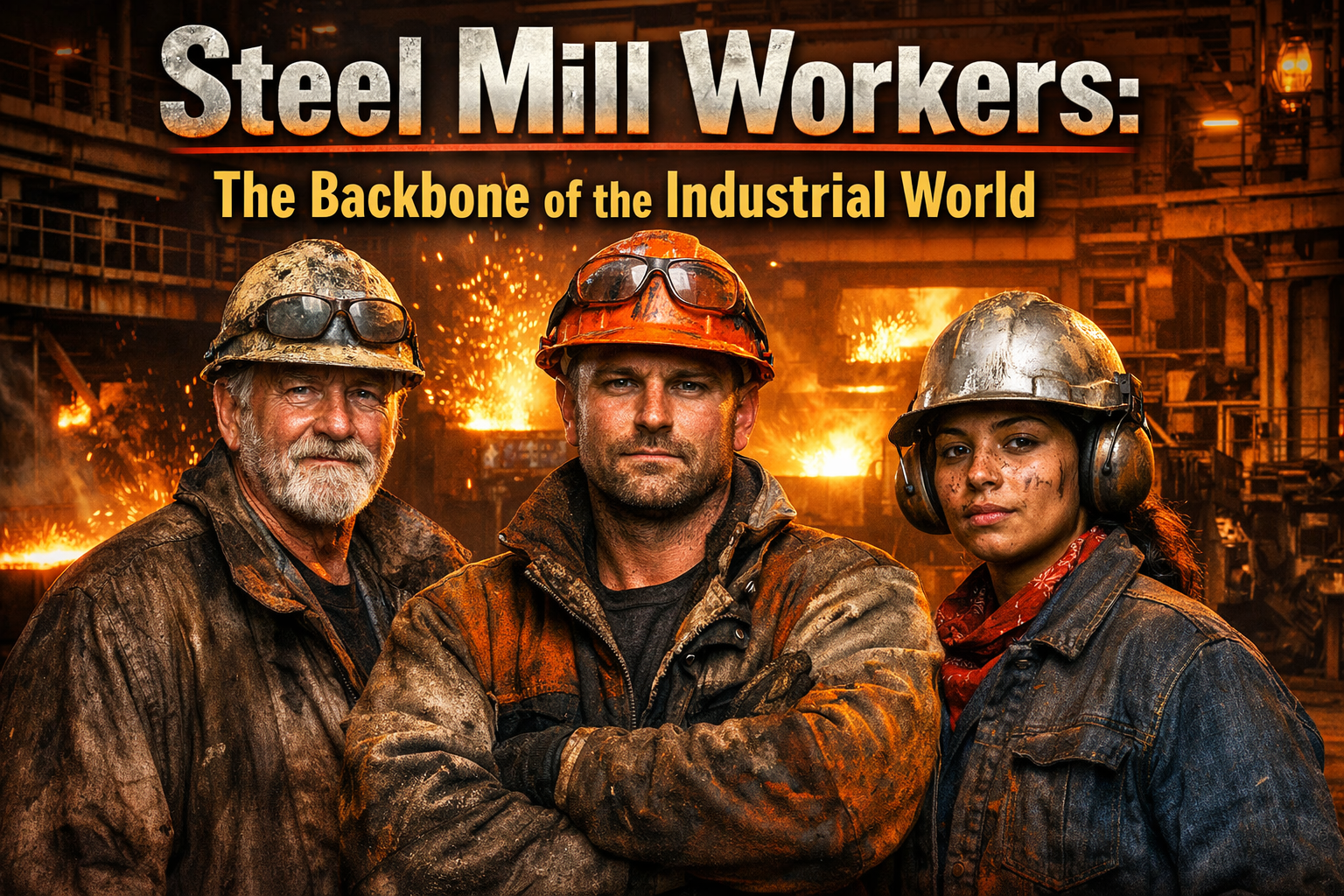
Working in a steel mill is not easy. The environment is often hot, noisy, and physically demanding. Temperatures near furnaces can become extremely high, and workers must wear protective clothing such as helmets, gloves, and heat-resistant suits to stay safe.
Steel mill workers also deal with heavy materials and large machines. Safety is always a top priority in these workplaces. Training programs and strict safety procedures are used to reduce the risk of accidents.
Despite these challenges, many workers take pride in their jobs. The sense of teamwork and the satisfaction of producing something essential for society make the work meaningful for many people in the industry.
Skills Required for Steel Mill Workers
Steel mill workers need a combination of physical strength and technical skills. Many positions require workers to understand how complex machines operate and how different stages of steel production work together.
Problem-solving skills are also important. If a machine stops working or if the production process faces a problem, workers must quickly identify the issue and fix it to avoid delays.
In addition, communication and teamwork are essential in steel mills. Workers often operate in teams where coordination and cooperation help keep the production process running smoothly.
Many steel mill workers receive specialized training or technical education. Some begin their careers as apprentices, learning from experienced workers before moving into more advanced positions.
Importance to the Economy
Steel mill workers contribute significantly to economic development. Steel is used in construction, transportation, manufacturing, and energy production. Without steel, many of the structures and machines we rely on today would not exist.
The work of steel mill employees supports industries such as automotive manufacturing, shipbuilding, railways, and infrastructure development. Every bridge, skyscraper, or railway track depends on steel produced by skilled workers in mills.
In many regions, steel mills also provide stable employment and support local communities. Generations of families have worked in the steel industry, making it an important part of their cultural and economic identity.
Modern Changes in the Steel Industry
The steel industry has changed significantly over the years. Modern technology has improved efficiency and safety inside steel mills. Automated machines and advanced monitoring systems now help workers control production more precisely.
However, despite technological progress, human workers remain essential. Skilled operators are needed to manage equipment, oversee production, and ensure that safety standards are followed.
In recent years, the industry has also focused on reducing environmental impact. New methods aim to lower emissions and make steel production more sustainable. Steel mill workers are often trained in these updated processes to support cleaner and more efficient manufacturing.
Respecting the Hard Work Behind Steel
Steel mill workers are often overlooked when people think about modern industries, yet their contribution is enormous. Every day they work in demanding conditions to produce the materials that build cities, vehicles, and infrastructure.
Their dedication reflects a long tradition of industrial craftsmanship and resilience. The strength of steel symbolizes the strength of the workers who produce it.
Conclusion
Steel mill workers are an essential part of the industrial world. Their skills, determination, and teamwork help produce one of the most important materials used in modern society. Despite working in tough environments, they continue to support economic growth and infrastructure development across the globe.
As technology continues to evolve, the role of steel mill workers may change, but their importance will remain. The steel industry relies on their expertise and commitment, making them true pillars of modern industrial progress.