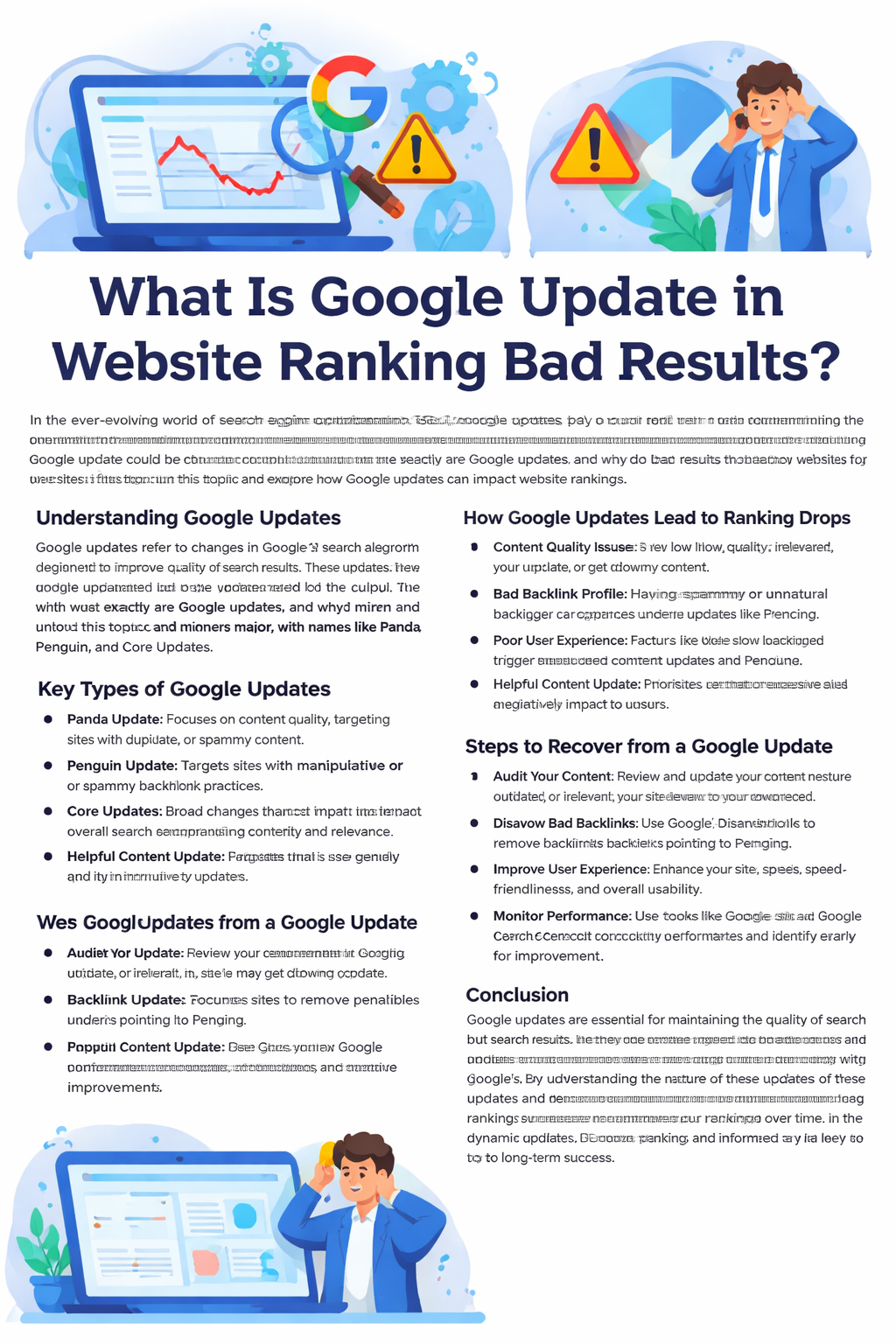
In the constantly evolving world of digital marketing, website owners, SEO specialists, and content creators face one recurring question: “What is a Google update in website ranking bad results?” Understanding this phenomenon is critical because it directly affects online visibility, traffic, and ultimately, revenue. Google, the dominant search engine globally, regularly updates its algorithms to improve the quality of search results. While these updates aim to enhance user experience, they can sometimes cause websites to experience a sudden drop in rankings, leading to what is often referred to as “bad results.”
Understanding Google Updates
Google updates are changes made to the search engine’s algorithm or core systems that determine how websites are ranked in search results. Google does not reveal every detail of these updates, but it provides general guidelines and recommendations to help webmasters adapt. These updates can range from minor tweaks to major algorithm overhauls, affecting how sites appear in search results.
The primary goal of Google updates is to ensure that users receive the most relevant, high-quality content. This means websites that previously ranked well might suddenly drop if they fail to meet new standards. Common examples include updates like Panda, Penguin, and more recently, Helpful Content and Core Web Vitals updates. Each update targets specific issues, such as low-quality content, spammy backlinks, or poor user experience.
Why Website Rankings Drop
When a website experiences a drop in ranking due to a Google update, several factors may be responsible. Some of the most common reasons include:
1. Low-Quality Content: Google continually prioritizes content that provides real value. Pages with thin content, duplicate content, or keyword stuffing often see a decline.
2. Spammy Backlinks: Poor-quality or manipulative backlinks can harm your site. Updates like Penguin specifically target unnatural link patterns.
3. Slow Website Speed: User experience is crucial. Slow-loading websites often see lower rankings after updates focused on Core Web Vitals.
4. Mobile-Friendliness Issues: With the majority of searches coming from mobile devices, websites not optimized for mobile can be negatively impacted.
5. User Experience Problems: High bounce rates, intrusive ads, and poor navigation can all contribute to ranking drops after updates.
Understanding these causes is essential for diagnosing the root problem after a Google update.
How to Identify a Google Update Effect
Website owners may notice a sudden drop in traffic or rankings, which can indicate the effect of a Google update. Tools like Google Search Console, Ahrefs, SEMrush, and Moz can help track changes in ranking, organic traffic, and keyword performance. By comparing traffic trends before and after the update, webmasters can pinpoint affected pages and take corrective measures.
Additionally, staying informed about Google’s announced updates can help. Websites like Search Engine Journal, Search Engine Land, and Google’s own Search Central Blog regularly report on algorithm changes, allowing webmasters to anticipate potential impacts.
How to Recover from Bad Results
Experiencing a ranking drop can be frustrating, but recovery is possible with a structured approach:
1. Audit Your Website: Conduct a full SEO audit to identify issues with content, links, and technical SEO.
2. Improve Content Quality: Focus on creating original, valuable, and in-depth content that addresses user intent. Avoid keyword stuffing and thin articles.
3. Clean Up Backlinks: Disavow spammy or low-quality backlinks. Focus on earning natural, authoritative links.
4. Enhance User Experience: Optimize page speed, mobile responsiveness, and website design. Ensure navigation is intuitive and content is accessible.
5. Follow Google Guidelines: Align your website with Google’s Webmaster Guidelines. Avoid black-hat SEO tactics that can result in penalties.
6. Monitor Performance: Continuously track your website using analytics tools. Measure traffic, engagement, and rankings to detect early warning signs of future updates.
Recovery may take time, especially if the update involves a broad algorithm change. Consistency and attention to quality remain key.
Why Google Updates Are Not Always Bad
While many view Google updates negatively, it is important to remember that they ultimately benefit users and responsible website owners. Updates filter out low-quality content, reduce spam, and reward websites that provide value. This creates a more trustworthy and engaging online ecosystem. For businesses, understanding updates allows them to maintain a competitive edge and adapt to evolving search trends.
Conclusion
The question, “What is Google update in website ranking bad results?”, reflects a common concern among website owners and digital marketers. Google updates are necessary adjustments to maintain search quality, but they can temporarily affect websites that fail to meet new standards. By understanding the causes of ranking drops, monitoring performance, and improving content, backlinks, and user experience, websites can recover and even thrive after updates.
Ultimately, staying informed and proactive is the best strategy. Rather than fearing updates, embracing them as opportunities to improve ensures long-term success in the competitive digital landscape.