Many people struggle with the urge to touch, squeeze, or “pump” their skin, especially when dealing with acne, blackheads, or uneven texture. While it may feel satisfying in the moment, this habit can do far more harm than good. Understanding why you should stop pumping on your skin—and how to replace this behavior with healthier alternatives—can make a big difference in your overall skin health.
What Does “Pumping on Skin” Mean?
“Pumping on skin” usually refers to repeatedly pressing, squeezing, or picking at areas of the skin. This often happens when someone notices a pimple, clogged pore, or small bump. Instead of letting it heal naturally, they try to force it out by applying pressure.
This behavior is extremely common, especially among people dealing with acne or stress-related skin issues. However, what many don’t realize is that this habit can worsen the very problem they’re trying to fix.
Why You Should Stop Pumping on Skin
1. It Spreads Bacteria
Your hands carry bacteria, even if they look clean. When you touch or squeeze your skin, you transfer bacteria into open pores or broken skin. This increases the risk of infection and can lead to more breakouts instead of fewer.
2. It Causes Scarring
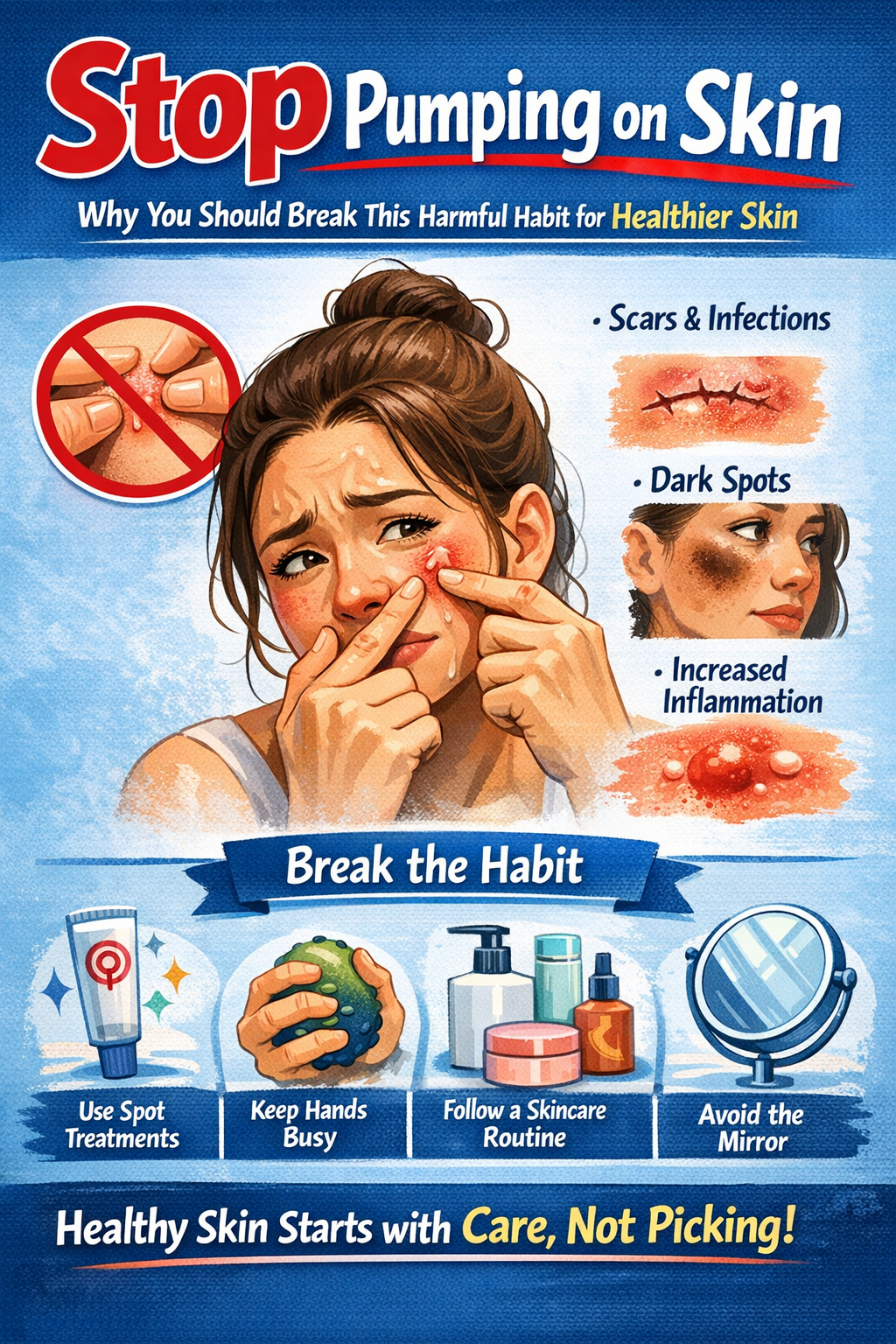
One of the biggest dangers of pumping on skin is permanent scarring. When you apply too much pressure, you damage the deeper layers of your skin. This can leave behind marks that take months—or even years—to fade.
3. It Worsens Inflammation
Squeezing a pimple doesn’t just remove what’s inside—it pushes some of it deeper into the skin. This causes more inflammation, redness, and swelling. Instead of healing faster, your skin takes longer to recover.
4. It Leads to Dark Spots
After repeatedly touching or picking at your skin, you may notice dark spots forming. These are known as post-inflammatory marks. They are especially common in people with medium to darker skin tones and can be difficult to treat.
5. It Becomes a Habit
What starts as a one-time action can quickly turn into a daily habit. Many people unconsciously touch their face throughout the day, especially when stressed or bored. Over time, this becomes a cycle that is hard to break.
The Emotional Side of Skin Picking
Pumping on skin is not always just about appearance. For many, it is linked to emotions such as anxiety, frustration, or lack of control. Some people find temporary relief in picking at their skin, but this relief is short-lived and often followed by regret.
Recognizing this emotional connection is an important step toward stopping the habit. Once you understand why you’re doing it, you can begin to replace it with healthier coping mechanisms.
Healthier Alternatives to Pumping on Skin
1. Follow a Simple Skincare Routine
Instead of trying to fix your skin with your hands, use proper skincare products. Cleanse your face gently, use a suitable moisturizer, and apply treatments designed for acne or texture. Consistency is key.
2. Use Spot Treatments
If you feel tempted to squeeze a pimple, try using a spot treatment instead. These products are designed to reduce inflammation and help the pimple heal naturally without damage.
3. Keep Your Hands Busy
Sometimes, the urge to touch your skin comes from boredom. Keeping your hands busy—whether with a stress ball, pen, or any small object—can help reduce this habit.
4. Avoid Mirrors When Triggered
Many people start pumping on their skin when they are too focused on minor imperfections in the mirror. Try limiting the time you spend examining your face closely, especially under bright lighting.
5. Practice Patience
Skin takes time to heal. There is no instant fix for acne or texture. Accepting this reality can help you resist the urge to interfere with the natural healing process.
Building Better Skin Habits
Stopping the habit of pumping on skin is not easy, but it is possible with awareness and effort. Start by setting small goals, such as avoiding touching your face for a few hours at a time. Gradually increase this as you build control.
It can also help to remind yourself of the consequences—scars, dark spots, and longer healing times. Keeping these outcomes in mind can strengthen your motivation to stop.
When to Seek Help
If you find that you cannot control the urge to pick or pump your skin, it may be helpful to talk to a professional. Dermatologists can provide proper treatment for your skin, while therapists can help address the emotional side of the habit.
There is no shame in asking for help. In fact, taking this step shows that you are serious about improving both your skin and your well-being.
Final Thoughts
“Stop pumping on skin” is more than just advice—it is a crucial step toward healthier, clearer, and more confident living. While the habit may feel harmless, its long-term effects can be damaging.
By choosing gentle care over force, patience over impulse, and awareness over habit, you give your skin the chance to heal properly. Over time, you will not only see improvements in your skin but also feel better about the way you treat yourself.
Healthy skin doesn’t come from pressure—it comes from care.