The Philippines is a country rich in culture, history, and tradition. With more than 7,000 islands and over a hundred ethnic groups, the nation is home to many unique cultural practices. Among the most fascinating of these traditions are the tribal dances of the Philippines. These dances are more than just performances—they are powerful expressions of identity, history, spirituality, and community life. For centuries, indigenous groups across the Philippines have used dance as a way to tell stories, celebrate victories, honor nature, and preserve their heritage.
The Cultural Importance of Tribal Dances
Tribal dances in the Philippines hold deep cultural meaning for indigenous communities. Long before modern entertainment existed, dance was an essential form of communication. Through movements, costumes, and music, tribes shared stories about their ancestors, daily life, and spiritual beliefs.
Many tribal dances are connected to rituals and ceremonies. Some dances are performed to give thanks for a good harvest, while others are used to pray for protection, healing, or success in battle. These dances help strengthen community bonds and allow younger generations to learn about their roots.
In many villages, tribal dances are still performed during festivals, weddings, and special cultural gatherings. They serve as a reminder that traditions are alive and should be respected and passed down.
Diversity of Indigenous Dance Traditions
The Philippines is home to many indigenous groups, each with its own style of dance. These groups include communities from the mountainous regions of Luzon, the islands of the Visayas, and the forests of Mindanao. Their dances reflect their environment, lifestyle, and beliefs.
For example, mountain tribes often perform dances that imitate animals, hunting movements, or farming activities. These dances symbolize their close connection with nature. In coastal areas, some dances reflect fishing traditions or the rhythm of the ocean.
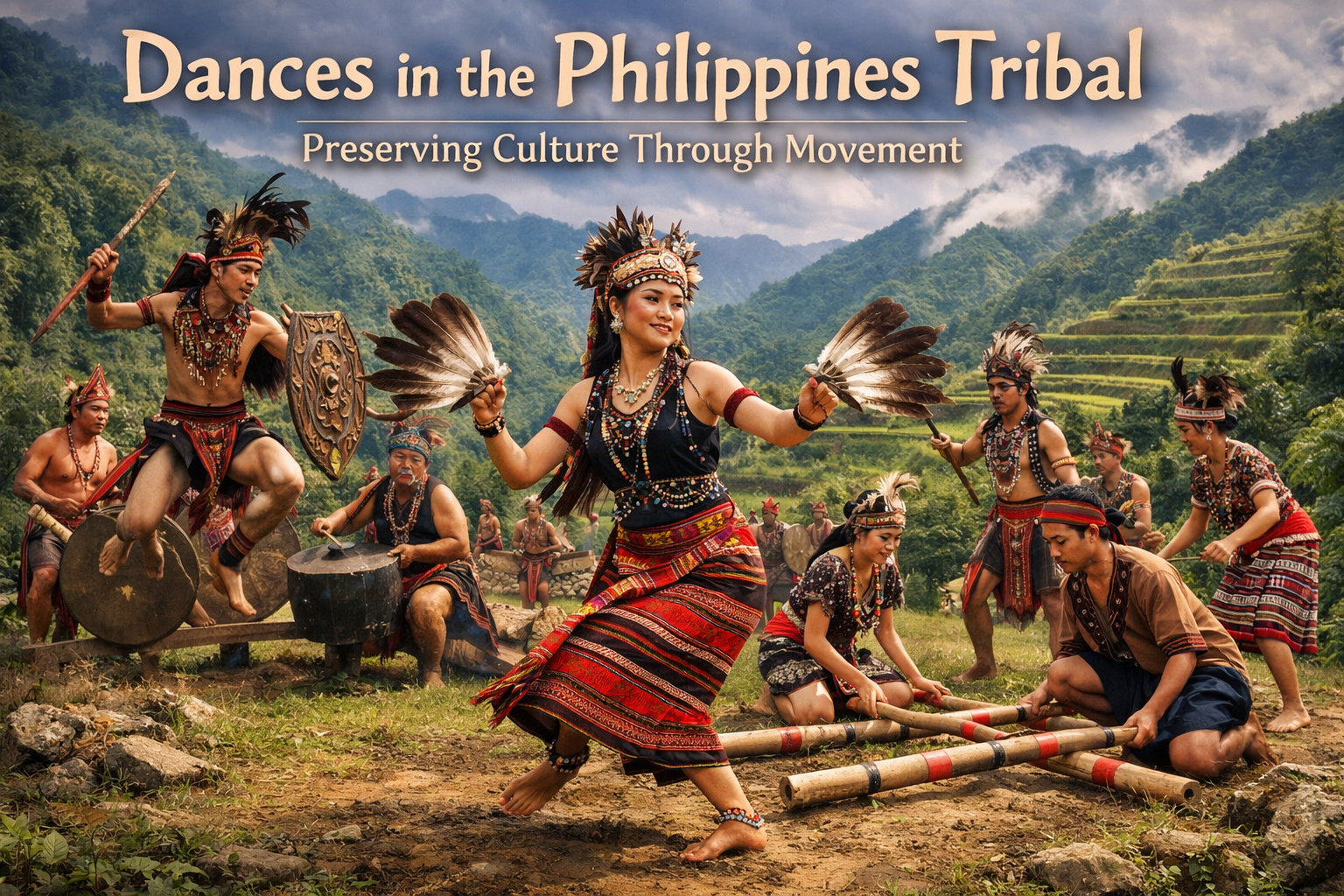
The movements in tribal dances can be slow and graceful or energetic and powerful. Dancers may move in circles, lines, or pairs while following the beat of traditional instruments such as gongs, drums, and bamboo percussion.
Costumes and Symbolism
Costumes play a very important role in tribal dances. Dancers often wear traditional clothing made from handwoven fabrics, beads, feathers, and natural materials. These costumes are not only beautiful but also carry symbolic meaning.
Colors, patterns, and decorations can represent a tribe’s identity, social status, or spiritual beliefs. For example, feathers may symbolize strength and bravery, while beads and intricate designs show craftsmanship and cultural pride.
In some dances, dancers also carry props such as shields, spears, or bamboo sticks. These items help tell the story of the dance and make the performance more dramatic and meaningful.
Music and Instruments
Music is the heartbeat of tribal dances. Without music, the movements would lose their rhythm and emotional power. Indigenous communities use traditional instruments that have been passed down for generations.
Gongs are among the most common instruments used in tribal dances. The deep, resonant sound of the gong sets the pace for the dancers. Drums provide strong beats that guide the performers, while bamboo instruments create unique rhythmic patterns.
The music is often repetitive and hypnotic, allowing dancers to move in harmony with one another. In many cases, musicians and dancers work closely together, creating a performance that feels alive and deeply connected.
Famous Tribal Dance Traditions
Several tribal dances from the Philippines have become well known for their beauty and cultural significance. These dances are often performed during cultural festivals and national celebrations.
Some dances imitate birds and animals, reflecting the tribes’ respect for nature. Others portray stories of courtship, bravery, or daily life in traditional communities. Each dance has its own unique rhythm, costume style, and meaning.
These performances not only entertain audiences but also educate people about the rich cultural diversity of the Philippines.
Preserving Indigenous Heritage
In today’s modern world, many indigenous traditions face challenges. Urbanization, technology, and changing lifestyles sometimes make it difficult for younger generations to stay connected to traditional practices.
However, many communities, cultural organizations, and educators are working hard to preserve tribal dances. Cultural festivals, school programs, and heritage events help keep these traditions alive. Elders often teach young dancers the correct movements, music, and stories behind each performance.
Government and cultural institutions also support efforts to document and promote indigenous dances so they will not disappear over time.
Tribal Dances in Modern Celebrations
Today, tribal dances are often featured in national festivals, tourism events, and cultural exhibitions. These performances allow visitors and younger Filipinos to experience the beauty of indigenous traditions.
While some performances are adapted for modern audiences, many communities strive to keep the original meaning and authenticity of their dances. Respect for cultural heritage remains a central part of these presentations.
For indigenous groups, dancing is not just about performance—it is about honoring their ancestors and celebrating who they are.
Conclusion
Tribal dances in the Philippines are powerful expressions of cultural identity and tradition. Through movement, music, and colorful costumes, indigenous communities share stories that have been passed down for generations. These dances reflect the deep connection between people, nature, and spirituality.
As the world continues to change, preserving these traditions becomes even more important. Tribal dances are not only a source of pride for indigenous groups but also a valuable part of the Philippines’ cultural heritage. By supporting and respecting these traditions, future generations will continue to experience the beauty and meaning of tribal dances for many years to come.